
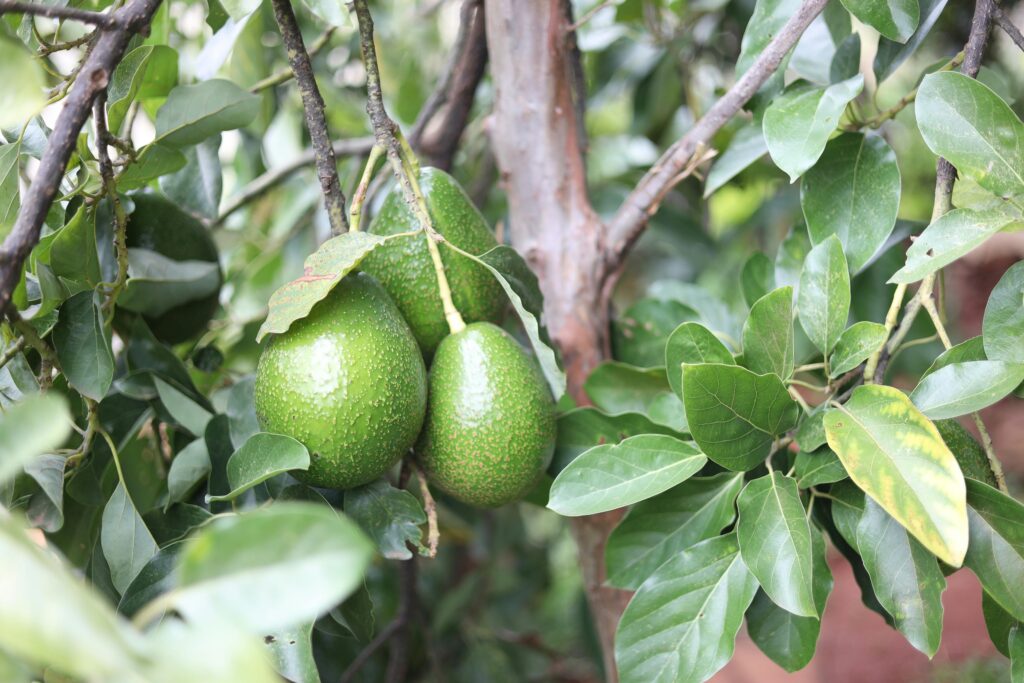
Rebuilding agroforestry systems in the Philippines through true-to-type vegetative propagation
Abstract
Agroforestry has long been promoted in the Philippines as a sustainable land-use system capable of restoring degraded uplands, improving food security, and increasing the income of smallholder farmers. Despite decades of investment by government agencies, non-government organizations, and international donors, many agroforestry initiatives have failed to achieve their intended outcomes. A major but often overlooked reason is the widespread distribution of fruit tree seedlings grown from seeds, resulting in trees that are not true to type, have long juvenile periods, low productivity, and inconsistent fruit quality. This journal-type article documents the context of agroforestry failure linked to poor planting materials and presents modern marcot (air layering) technology as a practical solution. Particular emphasis is given to avocado (Persea americana), a high-value but notoriously difficult species to air layer. The paper also reports experimental results on avocado, chico (Manilkara zapota), santol (Sandoricum koetjape), rambutan (Nephelium lappaceum), kalamansi (Citrus microcarpa), duhat (Syzygium cumini), and bignay (Antidesma bunius), where 100 marcots per species were produced, yielding success rates ranging from 97% to 100%. The findings demonstrate that modern marcot technology can reliably produce true-to-type, early-bearing planting materials suitable for agroforestry establishment, thereby addressing a critical bottleneck in upland development programs.
Keywords
Agroforestry, marcot, air layering, true-to-type seedlings, avocado propagation, fruit trees, Philippines, upland farming
1. Introduction
Agroforestry is widely recognized as a land-use system that integrates trees with crops and, in some cases, livestock to create ecological, economic, and social benefits. In the Philippines, agroforestry has been promoted as a strategic response to deforestation, soil erosion, climate vulnerability, and rural poverty, particularly in upland areas where millions of smallholder farmers depend on marginal lands for survival. Fruit-tree-based agroforestry systems are especially attractive because they combine environmental restoration with income generation.
However, despite strong policy support and repeated project implementation, many agroforestry initiatives in the country have underperformed or collapsed after only a few years. Farmers often abandon fruit trees due to poor growth, delayed fruiting, low yields, or inferior fruit quality. While factors such as limited extension support, land tenure insecurity, and market access are frequently cited, the quality and genetic integrity of planting materials remain a fundamental yet underappreciated issue.
Most fruit tree seedlings distributed under government and donor-funded programs are propagated from seeds. While seed propagation is inexpensive and easy to scale, it is unsuitable for most fruit tree species intended for commercial or semi-commercial agroforestry systems. Seed-grown trees are genetically variable, often not true to type, and may take many years before bearing fruit—if they bear desirable fruit at all. This article argues that the persistent reliance on seed-grown seedlings has undermined agroforestry success and that modern marcot technology offers a viable and scalable alternative.
2. Agroforestry Failure and the Problem of Seed-Grown Seedlings
In theory, agroforestry programs aim to provide farmers with high-quality planting materials that can deliver both ecological services and economic returns. In practice, many programs prioritize quantity over quality. Annual targets often focus on distributing tens or hundreds of thousands of seedlings, leading nurseries to rely on seed propagation as the fastest method of production.
Seed-grown fruit trees present several problems in upland agroforestry contexts. First, they are not genetically identical to the mother plant, meaning that superior traits such as fruit size, sweetness, aroma, disease resistance, and yield cannot be guaranteed. Second, many seed-grown fruit trees have long juvenile phases. Farmers may wait five to ten years before seeing any harvest, a delay that is incompatible with the immediate livelihood needs of resource-poor upland households.
Third, variability in tree performance creates frustration and erodes farmer confidence. When some trees bear inferior or unmarketable fruits, farmers may conclude that fruit-tree-based agroforestry is not worth the labor and opportunity cost. Over time, this contributes to tree neglect, premature cutting, or conversion of agroforestry plots back to annual cropping systems.
In the Philippine context, these challenges are compounded by the rugged terrain and harsh conditions of upland farms. Trees that fail to deliver economic value are quickly replaced or abandoned. Thus, the success of agroforestry hinges not only on species selection and system design but also on the use of true-to-type, early-bearing planting materials.
3. Marcot (Air Layering) as a Tool for Agroforestry Establishment
Marcotting, also known as air layering, is a vegetative propagation technique in which roots are induced to form on a branch while it is still attached to the mother plant. Once sufficient roots have developed, the branch is cut and planted as an independent tree. Because marcots are genetically identical to the source tree, they preserve desirable traits and ensure uniformity.
Traditionally, marcotting has been used by small-scale farmers and horticulturists for species such as calamansi, guava, and lychee. However, conventional marcot methods often suffer from inconsistent success rates, poor root development, and high mortality after transplanting. These limitations have led many extension workers to dismiss marcotting as impractical for large-scale agroforestry programs.
Modern marcot technology addresses these limitations through improved techniques, materials, and management practices. These include precise girdling methods, optimized rooting media, controlled moisture retention, use of appropriate rooting enhancers, and careful timing based on tree physiology. When properly implemented, modern marcotting can achieve high success rates even in species previously considered difficult to air layer.
4. The Challenge of Air Layering Avocado
Avocado is one of the most valuable fruit crops in both domestic and export markets. In the Philippines, avocado prices remain high due to limited supply, seasonal production, and inconsistent quality. Despite its economic potential, avocado remains underutilized in agroforestry systems, largely because of propagation challenges.
Avocado is traditionally propagated by grafting, which requires skilled labor, nursery infrastructure, and reliable rootstock production. Air layering avocado has long been considered difficult due to its thick bark, sensitivity to moisture imbalance, and tendency to form callus without producing sufficient roots. Many past attempts resulted in low success rates, reinforcing the perception that marcotting avocado is impractical.
The modern technique described in this study challenges that assumption. By carefully selecting semi-hardwood branches, applying a precise girdle that fully interrupts phloem flow without damaging the xylem, and using a well-aerated yet moisture-retentive rooting medium, consistent root initiation was achieved. Extended rooting periods, combined with strict moisture management and protection from excessive heat, proved critical. The result was a dramatic improvement in success rates, making avocado marcotting a viable option for agroforestry planting material production.
5. Experimental Design and Methodology
To evaluate the effectiveness of modern marcot technology, a series of propagation experiments were conducted on seven fruit tree species commonly used or with high potential for agroforestry in the Philippines: avocado, chico, santol, rambutan, kalamansi, duhat, and bignay.
For each species, 100 marcots were prepared using healthy, high-performing mother trees with proven fruit quality. Branches of appropriate diameter and physiological maturity were selected. A standardized marcotting protocol was applied, with minor species-specific adjustments in girdling width, rooting medium composition, and rooting duration.
All marcots were monitored regularly for root initiation, root mass development, and overall health. Upon sufficient rooting, marcots were severed from the mother tree, hardened off, and transplanted into nursery containers for survival assessment.
6. Results and Discussion
The experiments yielded remarkably high success rates across all species. Avocado marcots achieved a 97% success rate, a significant improvement over previously reported outcomes. Chico, santol, rambutan, kalamansi, duhat, and bignay each recorded success rates ranging from 98% to 100%.
These results demonstrate that modern marcot technology can overcome species-specific propagation challenges when applied correctly. The uniformity of the resulting planting materials was notable, with marcots exhibiting consistent growth patterns and early establishment vigor. Because marcots originate from mature tissues, they are expected to bear fruit significantly earlier than seed-grown counterparts.
For agroforestry systems, this translates into faster returns on investment and greater farmer confidence. Early fruiting also incentivizes tree care and long-term land stewardship, reinforcing the ecological objectives of agroforestry.
7. Implications for Agroforestry Programs in the Philippines
The adoption of modern marcot technology has profound implications for agroforestry establishment in the Philippines. By shifting from seed-based propagation to true-to-type vegetative methods, programs can dramatically improve the performance and credibility of fruit-tree-based systems.
Decentralized marcot production can be integrated into community-based nurseries, reducing dependence on centralized seedling suppliers. Farmers can be trained to produce their own planting materials from locally adapted, high-performing trees, fostering self-reliance and local innovation.
Moreover, the successful marcotting of high-value species such as avocado opens new income opportunities for upland farmers. When combined with appropriate market linkages and postharvest support, fruit-tree-based agroforestry can evolve from a conservation-oriented intervention into a genuinely profitable land-use system.
8. Conclusion
The persistent failure of many agroforestry initiatives in the Philippines cannot be fully addressed without confronting the issue of poor-quality planting materials. Seed-grown fruit tree seedlings, while easy to produce, undermine productivity, farmer confidence, and long-term system sustainability.
This article has shown that modern marcot technology offers a practical, high-success alternative for producing true-to-type fruit trees suitable for agroforestry establishment. Experimental results demonstrating 97% to 100% success rates across seven fruit tree species, including the traditionally challenging avocado, provide strong evidence of its potential.
By mainstreaming modern marcotting techniques within agroforestry programs, the Philippines can significantly improve the ecological and economic outcomes of upland development efforts. Ultimately, the success of agroforestry depends not only on planting trees, but on planting the right trees, propagated in the right way.
Support Our Research
This research helps protect endangered species. Consider donating to continue our work.